
Aug 5, 2008
If Only SpaceX Checked Top Gear
YouTube link here
If only SpaceX had reviewed the catastrophic outcome of this flight attempt by the BBC automotive show Top Gear.. perhaps the loss of their Falcon 1 launcher could have been averted ;)
It was pretty sad news for a young a dynamic company such as SpaceX, however I guess the message of all that is, whether you are flying a SpaceX Falcon 1 or Top Gear Shuttle, stage separation is critical issue and potential single point failure.
So to the guys at SpaceX, no rocket has been developed without failures, keep up the good work and we are sure that you will soon succeed!

Aug 3, 2008
Explore Space in Second Life
Going to Space, apparently, is a hard task. The main reason is that the physical world has its own rules, and these cannot be bent or crossed.
As a result, sending something or someone to Outer Space requires a great deal of money, matter and sweat. Others found a simpler solution, although some might say they have cheated.
If you cannot visit Space, bring Space to you. Directly from the Second Life blog, is the story of a boy that wanted to built rockets, and ended up man building Space, the Second Life environment space.
http://blog.secondlife.com/2005/03/12/space-exploration/.
As a result, sending something or someone to Outer Space requires a great deal of money, matter and sweat. Others found a simpler solution, although some might say they have cheated.
If you cannot visit Space, bring Space to you. Directly from the Second Life blog, is the story of a boy that wanted to built rockets, and ended up man building Space, the Second Life environment space.
http://blog.secondlife.com/2005/03/12/space-exploration/.
Many people still consider Second Life a toy for computer geeks, a dating site, or just something wacky. When informed that Second Life has its own economy and circulating currency they get surprised. When they are told that people manage businesses in Second Life, make money, invest in virtual land and even use it to laundry money, they get mind boggled.
Whether you consider Second Life a time waster or a legitimate source of fun, the fact is that there are people that consider Second Life a very promising platform, for marketing, long distance collaboration and conference tool, or simple and plain advertisement.
As a sub set of the Internet, it is no surprise that the same passioned people that put online websites about Space and rockets also buy land and start islands dedicated to their passion. As an example, here are 10 activities to do in SL related to Space and our neighboring planets.
http://dsc.discovery.com/space/top-10/space-10-second-life-places.html
Not only individuals but also Space related organizations are starting to populate SL, like the NASA Ames Research Center: http://www.space.com/adastra/070526_isdc_second_life.html
Another list of must do's in SL: Visit a rocket museum, or the NASA Amphitheater, where you can hover over the amphitheater of see the video programming from NASA TV on the big screen.
http://www.msnbc.msn.com/id/17865952/?pg=1#space_slguide_070330
Aug 1, 2008
Moon Walk Without Spacesuit
Just in case you were thinking of hitching a ride on our GLXP moon lander and you forgot to bring your spacesuit ...
Unlike in the movies, this NASA page explains that exposure to the vacuum of space does not cause your body to explode, but you would probably not enjoy the feeling of your tongue boiling or the asphixiation.
In fact, depending on your age, weight and other factors you could might survive many tens of seconds without permanent injury. Sounds like just enough time to grab a handfull of moon dust or try to see how high you can jump in the lunar gravity without that heavy spacesuit!
Unlike in the movies, this NASA page explains that exposure to the vacuum of space does not cause your body to explode, but you would probably not enjoy the feeling of your tongue boiling or the asphixiation.
In fact, depending on your age, weight and other factors you could might survive many tens of seconds without permanent injury. Sounds like just enough time to grab a handfull of moon dust or try to see how high you can jump in the lunar gravity without that heavy spacesuit!
Jul 26, 2008
GLXP War over the Moon

Well, it's not something that we at White Label Space would like to include in our GLXP mission but this ScoopOrbit post raises an interesting question for the GLXP - What position does GLXP have regarding the military use of space and the development of dual-use technologies?
Can GLXP teams sell their designs to a military contractor?
Can a military payload be flown on a GLXP lander or rover?
ScoopOrbit also included the above picture of a new space suit development for lunar operations. Maybe some people are already thinking along these lines :-)
As yet no German Google Lunar X PRIZE teams - Die Zeit Wissen
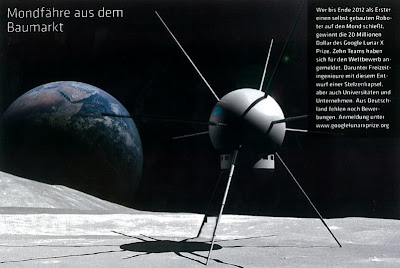
There was an article in the Die Zeit Wissen about the lack of German participation in the Google Lunar X PRIZE. This was first noted on The Launch Pad
You can download the full article in PDF format here. See translation below.
DYI Lunar Landers
Those who manage to build and land a robot on the moon by the end of 2012 will win the 20 Million Dollar Google Lunar X PRIZE. Ten teams have signed up so far.
Among them are the amateur engineers who designed the lander [pictured on the left] as well as university andindustrial participants.
There haven't been any German applications to enter the contest so far. Please apply at www.googlelunarxprize.org.
[Source: Die Zeit Wissen, 2008 (4), page 8]
The question is why has no German team stepped forward?
If there are German citizens that wish to join our upcoming European GLXP team please email us
Jul 24, 2008
First Art Exhibition in Outer Space
 Call for Space Art;
Tohoku University, Japan, is now developing a small satellite, named SPRITE-SAT, with launch planned for January 2009. The main mission of the satellite is a scientific study of lightening phenomena above the cloud layers but using this opportunity, they are also organizing the first art exhibition in outer space!
To take part in this exhibition you should submit monochrome digital pictures, which will be shrunk to a size of 1mm squares arranged as a mosaic on a silicon wafer fabricated using photolithography technology. The photolithography and etching process will be done on a standard silicon wafer, cut into a 3 cm by 3 cm piece, which will be exhibited in orbit attached on the top of an antenna boom on the top of the satellite. The artworks will also be exhibited on a special web page.
Submitting your artwork:
Please submit a digital drawing in 500×500 pixels, or a line drawing 500×500 pixels resolution. Black and white, no halftones. Submit as a digital file which can be displayed in 10 cm square on a computer screen.
Deadline of submission: August 10, 2008
Please send your submission or any questions to Prof. Kazuya Yoshida:
yoshida@astro.mech.tohoku.ac.jp
Jul 23, 2008
Japanese Lunar Exploration and the Google Lunar X PRIZE
How timely that I came across this Hyperbola blog post just after writing our own post on future government support for lunar exploration. It looks like the Japanese space agency JAXA shares many of the Google Lunar X PRIZE's visions for future use of the Moon.
But what a pity that the GLXP website has such a poor Japanese page. It appears that the site has little more than a translation of the main press releases and some information about the teams and key people. Furthermore, after exhaustive seraching we were unable to find a Japanese version of the GLXP promotional video - "Moon 2.0, Join the Revolution".
If the X PRIZE foundation and Google want to engage the large and affluent Japanese appetite for space-related issues they should really invest a bit more money in providing their content in the Japanese language.
But what a pity that the GLXP website has such a poor Japanese page. It appears that the site has little more than a translation of the main press releases and some information about the teams and key people. Furthermore, after exhaustive seraching we were unable to find a Japanese version of the GLXP promotional video - "Moon 2.0, Join the Revolution".
If the X PRIZE foundation and Google want to engage the large and affluent Japanese appetite for space-related issues they should really invest a bit more money in providing their content in the Japanese language.
Jul 22, 2008
The Moon in 3D
The concept of 3D video and television has been around for quite a while now, but it is slowly becoming a reality. Viewers in Japan can already receive an hour a day of 3D broadcasts, which can be viewed on special LCD TVs with polarized glasses.
Philips is even working on a system (WOWvx)to do away with the glasses, allowing the whole family to enjoy 3D images just the way we enjoy normal TV now!
But regardless of the way we view 3D images and movies, they have to be recorded first! And that generally means 2 cameras, with a spacing similar to the human eye, recording in sync. From this, 3D scenes can be rendered and, on the Moon, scientific data can be obtained (distances, crater depths etc.) opening up a whole new prospect for in-situ geology. Coupled with this, having a 3D image of the scene makes tele-operation of a lunar rover much more manageable.
Remember: this isn't like the Mars rovers with a little training, a human operator can get used to the delay and adapt to real-time operations on the lunar surface. So should we record the Moon in 3D? Definitely! After all, why take one camera, when you could take two!
Jul 21, 2008
Joke: Engineering Hell
(This is an oldy but a goody!)
An engineer dies and reports to the pearly gates. St. Peter checks his dossier and says, "Ah, you're an engineer -- you're in the wrong place."
So, the engineer reports to the gates of hell and is let in. Pretty soon, the engineer gets dissatisfied with the level of comfort in hell, and starts designing and building improvements. After awhile, they've got air conditioning and flush toilets and escalators, and the engineer is a pretty popular guy.
One day, God calls Satan up on the telephone and says with a sneer, "So, how's it going down there in hell?"
Satan replies, "Hey, things are going great. We've got air conditioning and flush toilets and escalators, and there's no telling what this engineer is going to come up with next."
God replies, "What??? You've got an engineer? That's a mistake -- he should never have gotten down there; send him up here."
Satan says, "No way. I like having an engineer on the staff, and I'm keeping him."
God says, "Send him back up here or I'll sue."
Satan laughs uproariously and answers, "Yeah, right. And just where are YOU going to get a lawyer?"
An engineer dies and reports to the pearly gates. St. Peter checks his dossier and says, "Ah, you're an engineer -- you're in the wrong place."
So, the engineer reports to the gates of hell and is let in. Pretty soon, the engineer gets dissatisfied with the level of comfort in hell, and starts designing and building improvements. After awhile, they've got air conditioning and flush toilets and escalators, and the engineer is a pretty popular guy.
One day, God calls Satan up on the telephone and says with a sneer, "So, how's it going down there in hell?"
Satan replies, "Hey, things are going great. We've got air conditioning and flush toilets and escalators, and there's no telling what this engineer is going to come up with next."
God replies, "What??? You've got an engineer? That's a mistake -- he should never have gotten down there; send him up here."
Satan says, "No way. I like having an engineer on the staff, and I'm keeping him."
God says, "Send him back up here or I'll sue."
Satan laughs uproariously and answers, "Yeah, right. And just where are YOU going to get a lawyer?"
Goverment Support for Future Lunar Missions
The recent post on the Space Prizes Blog makes an interesting point. Space agencies will probably need to show interest in using the lunar lander systems developed by GLXP teams otherwise investors will just not believe it is worth the effort developing lunar landers for a single mission.
Jul 20, 2008
Robotic Exploration Problem Featured in ICFP Contest
This year's ICFP Contest might help bring space-related AI challenges to the the attention of the programming languages community. The task of the contest is to deploy control software for a Martian lander and steer a rover from its starting position to its home base.
While the details of the task are abstracted from real deployment scenarios or even tongue-in-cheek, the fundamental idea is a point of very much debate and research. Increased autonomy of spacecraft and rovers is very much a multi-dimensional optimisation challenge in terms of science return and safety.
Communication with spacecraft increases in cost the further away the object is from Earth. On the other hand, the science instruments may detect interesting events that require timely action. The event might not be over before decision makers in mission control are able to update the schedule.
This is where increased autonomy might come into play. Of course, the safety of the mission must not be compromised by having the spacecraft issue commands that impact its own functioning. But science return might be increased significantly by identifying simply cases where the vehicle is allowed to deviate from its given schedule and return to normal operation after ad-hoc observation that were triggered by certain events.
Ideally, software tools should be adapted to quantify the benefits, impacts and drawbacks of such ideas. White Label Space hopes that the passionate participants of contests like this year's ICFP Contest help enlarge the pool of technologies from which the space community can draw their technologies.
Jul 17, 2008
The Social Value of Lunar Exploration
We were recently asked about our project's meaning to society. This is a good question that should be asked of any space-related activities beyond the obvious ones that directly serve people on Earth (telecommunications and remote sensing).
Our goal of sending a robotic lander to the Moon's surface has many benefits to society. Firstly, the desire to explore new territories is a theme embedded in all societies since the dawn of humanity. In the beginning exploration was by use of our own legs and then later by the legs of animals. In the last 2 millennia we began to use machines to aid our exploration - ships, cars, aircraft. Only in the last half of the 20th century did we start to explore space, first with machines and the later with humans.
We believe that our exploration of space is only just beginning, and indeed our current generation is sitting on the frontier of that exploration. We can choose to continue the bold visions of space exploration seen during the space race while those vision are still in our consciousness and in the memories of our parents generation. Alternatively, society can choose to turn its back on space exploration and focus its energies on the problems here on Earth. By sending a robotic craft back to the surface of the Moon we are saying that humanity's urge to explore will not end at the atmosphere and space near Earth. We see the return to the Moon as a way to remind society the benefits of space exploration.
Exploration of the Moon done with today's technologies should be cheaper in the sense that it places less burden on society. We would like to prove that by using modern technologies for engineering design, and the internet we can undertake a lunar surface mission at a fraction of the cost of the traditional space missions that are funded by governments. We would like to show that we can develop new technologies to meet these challenges, and that the technologies we develop will have benefits back on Earth as well as in space.
Another important benefit to society of our lunar mission will be the expansion of humanity's consciousness This will take place in many ways, scientifically, sociologically and artistically. When we go to the Moon we will take all of humanity with us. We will show them the stark beauty of the lunar surface in high definition imagery and videos. Also, we will show that small groups of motivated individuals can achieve extraordinary things that everyday life doesn't permit. Our lunar lander mission will pave the way for sending low-cost scientific missions to study the Moon up close, which has profound implications to the formation of the Earth and all life on it.
Our goal of sending a robotic lander to the Moon's surface has many benefits to society. Firstly, the desire to explore new territories is a theme embedded in all societies since the dawn of humanity. In the beginning exploration was by use of our own legs and then later by the legs of animals. In the last 2 millennia we began to use machines to aid our exploration - ships, cars, aircraft. Only in the last half of the 20th century did we start to explore space, first with machines and the later with humans.
We believe that our exploration of space is only just beginning, and indeed our current generation is sitting on the frontier of that exploration. We can choose to continue the bold visions of space exploration seen during the space race while those vision are still in our consciousness and in the memories of our parents generation. Alternatively, society can choose to turn its back on space exploration and focus its energies on the problems here on Earth. By sending a robotic craft back to the surface of the Moon we are saying that humanity's urge to explore will not end at the atmosphere and space near Earth. We see the return to the Moon as a way to remind society the benefits of space exploration.
Exploration of the Moon done with today's technologies should be cheaper in the sense that it places less burden on society. We would like to prove that by using modern technologies for engineering design, and the internet we can undertake a lunar surface mission at a fraction of the cost of the traditional space missions that are funded by governments. We would like to show that we can develop new technologies to meet these challenges, and that the technologies we develop will have benefits back on Earth as well as in space.
Another important benefit to society of our lunar mission will be the expansion of humanity's consciousness This will take place in many ways, scientifically, sociologically and artistically. When we go to the Moon we will take all of humanity with us. We will show them the stark beauty of the lunar surface in high definition imagery and videos. Also, we will show that small groups of motivated individuals can achieve extraordinary things that everyday life doesn't permit. Our lunar lander mission will pave the way for sending low-cost scientific missions to study the Moon up close, which has profound implications to the formation of the Earth and all life on it.
Jun 26, 2008
ARCA and The Future of Things
As you maybe heard in The Future of Things article, ARCA, an official GLXP team from Romania announced the upcoming launch of their Stabilo rocket. This declaration generated quite a hype on the net announcing the upcoming landing of the first contender of the GLXP on the Moon Surface.
But what should we think about it? Is really ARCA going to land on the moon and win the prize … in few weeks? Well, don't worry, the answer is a crystal clear : NO ! So what is happening?
In fact, if you read the GLXP website post you'll see that ARCA is really just launching its latest rocket, not the first GLXP launch but the last one of the original X PRIZE (the one that finished few year ago with the first private "space flight").Members of our team had the opportunity to meet and discuss with the ARCA representatives during the First GLXP Team Submit last May in Strasbourg (France). They explained then that the objective of the flight was to perform their first sub-orbital flight (so launch a rocket to few hundred kilometers of altitude) nothing like going to the moon.
If you have seen some of their videos or concepts, you might have been a bit surprised by their, shall we say, "unconventional approach" but bare in mind that those guys are really taking it seriously and manufacturing/launching hardware … It should be a source of respect and motivation. Like them, our team hopes to soon start advance tests and why not be the first on the moon!
But what should we think about it? Is really ARCA going to land on the moon and win the prize … in few weeks? Well, don't worry, the answer is a crystal clear : NO ! So what is happening?
In fact, if you read the GLXP website post you'll see that ARCA is really just launching its latest rocket, not the first GLXP launch but the last one of the original X PRIZE (the one that finished few year ago with the first private "space flight").Members of our team had the opportunity to meet and discuss with the ARCA representatives during the First GLXP Team Submit last May in Strasbourg (France). They explained then that the objective of the flight was to perform their first sub-orbital flight (so launch a rocket to few hundred kilometers of altitude) nothing like going to the moon.
If you have seen some of their videos or concepts, you might have been a bit surprised by their, shall we say, "unconventional approach" but bare in mind that those guys are really taking it seriously and manufacturing/launching hardware … It should be a source of respect and motivation. Like them, our team hopes to soon start advance tests and why not be the first on the moon!
Jun 15, 2008
Our Brand Image
To support our mission we will create a strong and independent brand image. To do this it will be important to highlight our differences from the other GLXP competitors.
Our brand image is:
- Knowledgable, Capable, Experienced (as space engineers)
- Motivated, Driven, Passionate
- Young
- Creative, Innovative, Original
- Dynamic
- International, Diverse
- Dream-driven
We will coordinate all our media activities to emphasize these aspects.
Jun 14, 2008
New Partnership with Wroclaw University of Technology
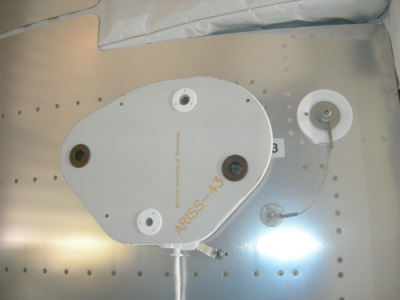
We are proud to announce that we have a new partner for the Communications Subsystem of our GLXP Lander! Wroclaw University of Technology's Institute of Telecommunications, Teleinformatics and Acoustics has extensive experience developing aerospace communications equipment including the Amateur Radio for the ISS (ARISS) antenna shown here mounted to the Columbus Module of the International Space Station.
Jun 8, 2008
Web Presence
Any GLXP business plan we can imagine will be fundamentally based around the team's website. Luckily our team includes many people with diverse backgrounds. In addition to the obvious space engineering & science types, we also have people experienced in web design, media, graphics and art.
We plan to implement our web presence with an incremental approach. As a first stage, during 2008 we used a Tumblr site to establish our initial web presence under the temporary name Thestor Cargo. Later we moved to this Blogger platform, which gives more features and has some very useful options for customization of the layout. In the future we will move to a more comprehensive tool such as Word Press for a fully featured website.
We plan to implement our web presence with an incremental approach. As a first stage, during 2008 we used a Tumblr site to establish our initial web presence under the temporary name Thestor Cargo. Later we moved to this Blogger platform, which gives more features and has some very useful options for customization of the layout. In the future we will move to a more comprehensive tool such as Word Press for a fully featured website.
Jun 1, 2008
Space Art:
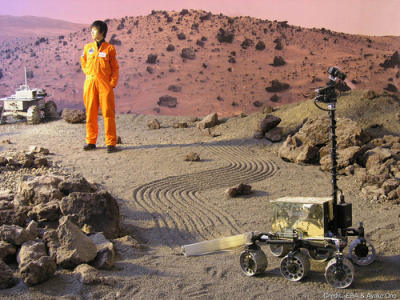
Since 1996 Ayako Ono has been exploring humanity's frontiers in the cosmos and imagination with her space art. The role of art is to stimulate the senses and imagination, broaden perceptions, and explore new perspectives. Sometime soon future generations will live far from the earth's surface. The resulting changes to the living environment will necessarily affect a radical transformation in common values. Space Art will help us prepare for the creation of these new values, and help answer the fundamental question of how human beings will evolve with these new values. In tackling this complex proposition, we will explore and invent new notions of beauty in cosmic space, through the interaction between various values systems.
May 30, 2008
The Swiss Propulsion Lab
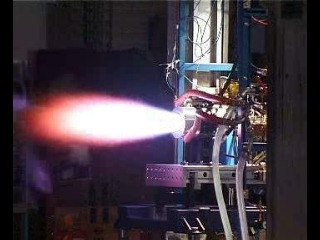 The Swiss Propulsion Laboratory (SPL) has extensive developing cheap and reliable rocket propulsion systems using non-toxic propellants.
SPL is supporting the design and testing of a new throttlable engine based on non-toxic propellants for our mission in Google Lunar X PRIZE (GLXP).
Below is a news story about SPL by Swiss broadcaster MTW.
***
May 27, 2008
Conceptual Design
Our IT infrastructure is also an important aspect of our conceptual design process since we are working in a distributed manner. As the design progresses we are developing spreadsheets for each subsystem. For the generation of our the system level budgets (e.g. mass, power, etc) we are using the J-CDS Concurrent Design Platform Platform to link together the relevant outputs from our subsystem spreadsheets together
The first step in our design process was to define the overall scope of the conceptual design study. The aim was to define the principal assumptions that will drive the detailed design of the subsystems.
Next the main design options for each subsystem were identified, in preparation for more detailed analysis of the various options.
That's about as far as we've got so far. The next step which is due to kick off this week will be to start the design, looping through the subsystems – starting with the issues that most drive the design - trajectory analysis, propulsion, lander and rover architectures, etc.
The first step in our design process was to define the overall scope of the conceptual design study. The aim was to define the principal assumptions that will drive the detailed design of the subsystems.
Next the main design options for each subsystem were identified, in preparation for more detailed analysis of the various options.
That's about as far as we've got so far. The next step which is due to kick off this week will be to start the design, looping through the subsystems – starting with the issues that most drive the design - trajectory analysis, propulsion, lander and rover architectures, etc.
May 25, 2008
Team Organization
Right from the beginning we realized that this would need a big team. Projects with unpaid team members are never easy, and landing a rover on the moon and sending back high quality video and photography is probably one of the most challenging volunteer projects ever attempted!
The first order of business was to tackle the IP issues. How can a distributed team of unpaid people be confident that they will get whatever rewards they are looking for from participation in such a project? Well, it wasn't easy but through lots of discussions we finally converged on a way to keep people motivated.
Also, early on we recognized the challenges with the information system. We investigated some different options but we eventually settled on using a wiki framework for keeping track of general discussions and an https secure web folders for our detailed documentation and larger files. We are continuously evaluating other options however, and we may later switch to other solutions or add new elements to our information system. Google Sites (http://sites.google.com) looks interesting and we are just starting to see if it will meet out needs.
The first order of business was to tackle the IP issues. How can a distributed team of unpaid people be confident that they will get whatever rewards they are looking for from participation in such a project? Well, it wasn't easy but through lots of discussions we finally converged on a way to keep people motivated.
Also, early on we recognized the challenges with the information system. We investigated some different options but we eventually settled on using a wiki framework for keeping track of general discussions and an https secure web folders for our detailed documentation and larger files. We are continuously evaluating other options however, and we may later switch to other solutions or add new elements to our information system. Google Sites (http://sites.google.com) looks interesting and we are just starting to see if it will meet out needs.
Subscribe to:
Posts (Atom)